

Plenty of affiliate marketers can point to a niche, a platform, and a folder of published content, and still watch their traffic and commissions sit flat for months. That gap between effort and results is confusing precisely because it doesn’t look like failure from the outside. The site exists. The posts are live. The work is happening.
What’s usually missing isn’t more content or a different niche. It’s a handful of habits that quietly cap how far the existing work can go. None of these are beginner errors in the sense of “forgot to pick a niche.” They’re the kind of mistakes that only show up once someone has already started, which is exactly why they’re easy to miss and expensive to leave uncorrected.
Why doing “everything right” can still stall your results
Most advice aimed at new affiliate marketers covers the setup phase: choose a niche, choose a platform, learn the basics of SEO, publish consistently. Someone who has done all of that has cleared the first hurdle. But a site can tick every one of those boxes and still underperform, because the mistakes that cap growth tend to live in the follow-through, not the starting line.
The seven habits below are the ones that show up after launch: in how content gets written, how products get chosen, how links get placed, and how numbers get read (or ignored). Fixing them doesn’t require starting over. It requires looking honestly at work that’s already published.
Mistake 1: Chasing every new platform instead of mastering one
It’s tempting to treat a slow month as a sign the platform is wrong. Maybe the blog should become a YouTube channel. Maybe TikTok is where the real traffic is. Maybe Pinterest would have been faster.

Platform-hopping feels like progress because it produces activity, but it resets the clock every time. SEO rankings take months to build. Audience trust on a video channel takes consistent uploads over time. Switching platforms every few months means never getting far enough into any one of them to find out whether it actually works for the niche.
The fix isn’t picking the “best” platform in the abstract. It’s picking one that fits the content being produced and the audience being served, then giving it enough time and volume to judge fairly. For a side-by-side look at what different platforms actually demand in terms of time, skill, and payoff, the comparison in Best Affiliate Marketing Platforms for Beginners in 2026 is worth reading before deciding whether a switch is actually justified or just a reaction to a slow week.
Mistake 2: Promoting products you haven’t personally vetted
A review built entirely from the manufacturer’s spec sheet and a few scraped customer quotes reads differently than a review built on someone who has actually used the product or spoken to people who have. Readers can usually tell the difference, even if they can’t articulate why one review feels trustworthy and another feels hollow.

Vetting a product doesn’t always mean buying it. It can mean reading a wide range of verified reviews, checking the seller’s return policy and complaint history, comparing it honestly against alternatives, and being willing to say where it falls short. What it can’t mean is recommending something solely because the commission is attractive. That approach might generate a click, but it tends to generate refunds, complaints, and a reader who never comes back.
The sites that keep earning commissions over time are usually the ones where the recommendation would hold up even without the affiliate link attached.
Mistake 3: Writing for search engines and forgetting the human reading the page
Keyword density, header structure, and internal linking matter, but a page built to satisfy a search algorithm first and a reader second tends to read like it: stiff, repetitive, padded with phrases that exist to hit a word count rather than answer a question.
A reader who lands on a page because they searched “best budget espresso machine” wants to know which machine to buy and why. They don’t want to read three paragraphs restating the search term before the actual answer shows up. If a post prioritizes search engine signals so heavily that the person reading it has to wade through filler to find the point, it will struggle to hold attention, and time on page and bounce rate are themselves ranking signals. Writing for the human first tends to satisfy the algorithm anyway, because search engines are built to reward exactly that.
A useful test: read the post aloud. If it sounds like something a knowledgeable person would say to a friend asking for advice, it’s probably fine. If it sounds like a keyword was dropped into every other sentence, it needs a rewrite.
Mistake 4: Treating SEO as a one-time task instead of ongoing work
Publishing a post, doing keyword research up front, and never touching it again is one of the quieter ways momentum stalls. Search rankings shift as competitors publish new content, as search engines update how they weigh signals, and as the products or information in the post go out of date.
A post that ranked well eight months ago can quietly slide down the results page while nothing about the site changes on the surface. The traffic drop shows up weeks later as a dip in commissions, and by the time it’s noticed, the cause isn’t obvious unless someone has been tracking rankings and traffic over time.

Ongoing SEO work doesn’t mean rewriting every post monthly. It means periodically checking which pages have dropped in rankings or traffic, updating outdated information, adding sections that answer questions the original post missed, and refreshing publish dates when the update is substantial enough to warrant it. The mechanics of how search engines evaluate affiliate content, and why that evaluation keeps changing, are covered in more depth in The Role of SEO in Affiliate Marketing.
Mistake 5: Burying your affiliate links instead of building genuine recommendations
Some marketers, worried about looking too promotional, bury their affiliate links so deep in a post that a reader has to search for them. Others go the opposite direction and scatter links everywhere, turning every third word into a hyperlink that makes the post feel like an ad.
Both approaches miss the same point: a link only converts if it shows up at the moment a reader is ready to act on a recommendation they already trust. That means placing links where the recommendation naturally lands, after the reasoning that supports it, not before it and not nowhere.
A genuine recommendation explains why a product fits a specific situation, what it’s not good for, and how it compares to the alternative a reader might also be considering. The link becomes the natural next step in that reasoning rather than a thing dropped in because a sidebar widget needed one. Readers respond to that difference even when they can’t name it, and it shows up in click-through rates over time.
Mistake 6: Giving up on a niche before it has had time to compound
Affiliate income tends to be lumpy at the start. A site can publish thirty posts and earn almost nothing for months, then see traffic and commissions start compounding once enough pages have had time to rank and enough internal links have built up authority across the site.
Abandoning a niche at month four because it “isn’t working” often means abandoning it right before the compounding would have started to show. That’s not a guarantee every niche will eventually work. Some niches genuinely have too much competition or too little buyer intent to be worth the effort, and no amount of patience fixes that. But the decision to pivot should be based on a clear read of the data (rankings, traffic trends, search demand) rather than frustration with a slow few months.
Anyone reconsidering whether their niche choice was sound in the first place, rather than whether they’ve simply not given it enough time, may find it useful to revisit How to Choose a Profitable Niche for Affiliate Marketing and check the original choice against what the data now shows, rather than against how the last few weeks have felt.
Mistake 7: Ignoring your numbers until commissions disappoint you
It’s easy to publish content for months without regularly checking which posts are driving traffic, which are driving clicks on affiliate links, and which are actually converting those clicks into commissions. The first sign of a problem, for many marketers, is a month where earnings drop and there’s no clear reason why, because nobody was watching the leading indicators that would have shown the problem coming.
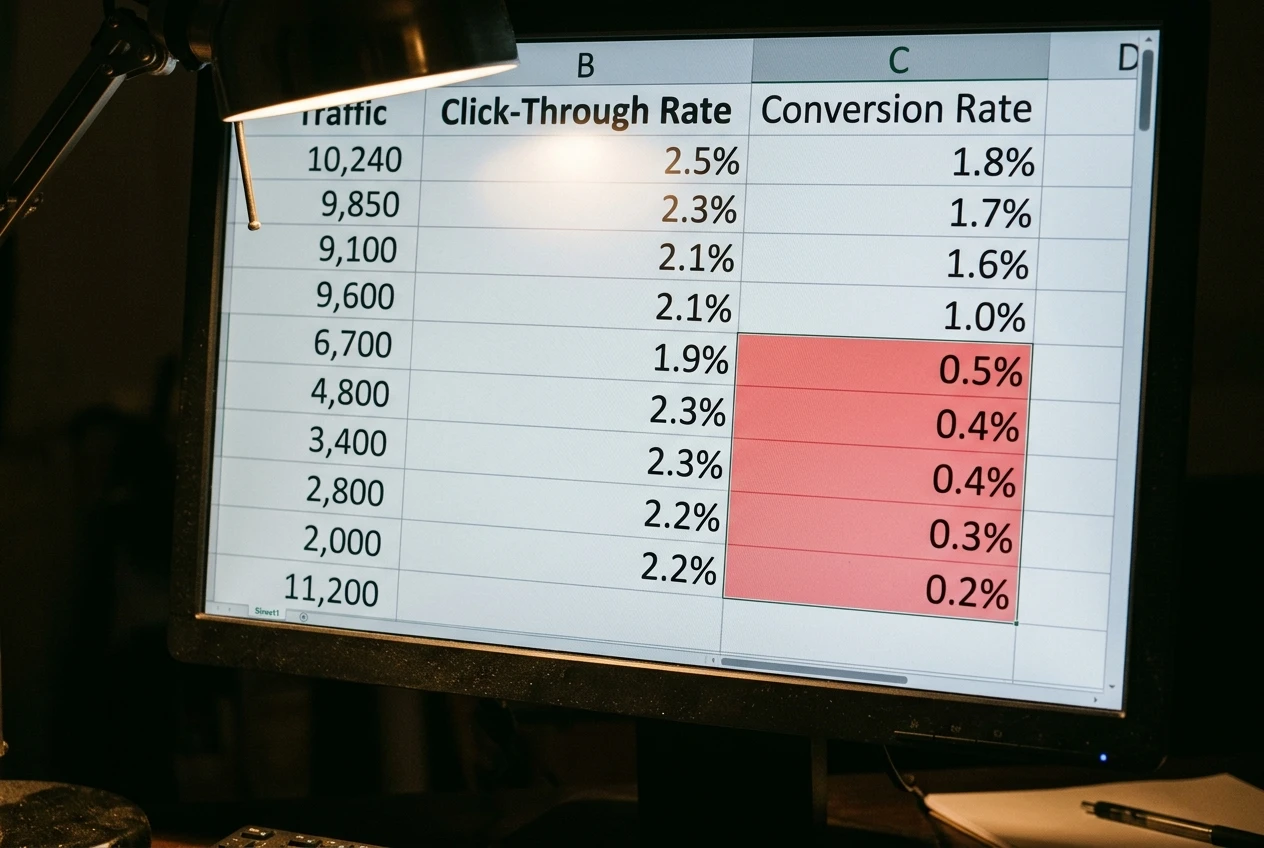
Traffic, click-through rate on affiliate links, and conversion rate are three different numbers, and a drop in any one of them points to a different fix. Falling traffic suggests a ranking or content problem. Falling click-through rate on steady traffic suggests the links or recommendations themselves aren’t landing. Falling conversion rate on steady clicks suggests the product, the offer, or the audience match has shifted.
Checking these numbers monthly, even briefly, turns commission disappointment from a surprise into an early warning that can be acted on before a slow month becomes a slow quarter.
The one-week audit to catch these mistakes before they cost you another month

Rather than trying to fix all seven at once, a focused week spent auditing existing content against this list tends to surface the one or two mistakes doing the most damage. Pull up analytics and go through the published content asking:
- Has this site been on the current platform long enough to judge it fairly, or has effort been split across too many platforms to build momentum on any one?
- Would each product recommendation hold up if the affiliate link were removed?
- Does each post read naturally out loud, or does it sound written for a search engine?
- Which posts haven’t been touched in six months or more, and have any of them dropped in rankings since they were published?
- Do affiliate links sit where a reader would naturally want to click, based on the reasoning that comes before them?
- Is the niche being judged on real data, or on how the last few weeks have felt?
- When was the last time traffic, click-through rate, and conversion rate were checked together?
If the audit turns up a foundational gap rather than one of these habits, that’s worth knowing too. A niche that was never researched properly or a platform chosen without comparing the alternatives is worth revisiting directly: How to Choose a Profitable Niche for Affiliate Marketing and Best Affiliate Marketing Platforms for Beginners in 2026 are the places to start fixing that. For most people who’ve already been doing the work, though, the audit above will point to one of the seven habits above, and that’s a far smaller fix than starting over.